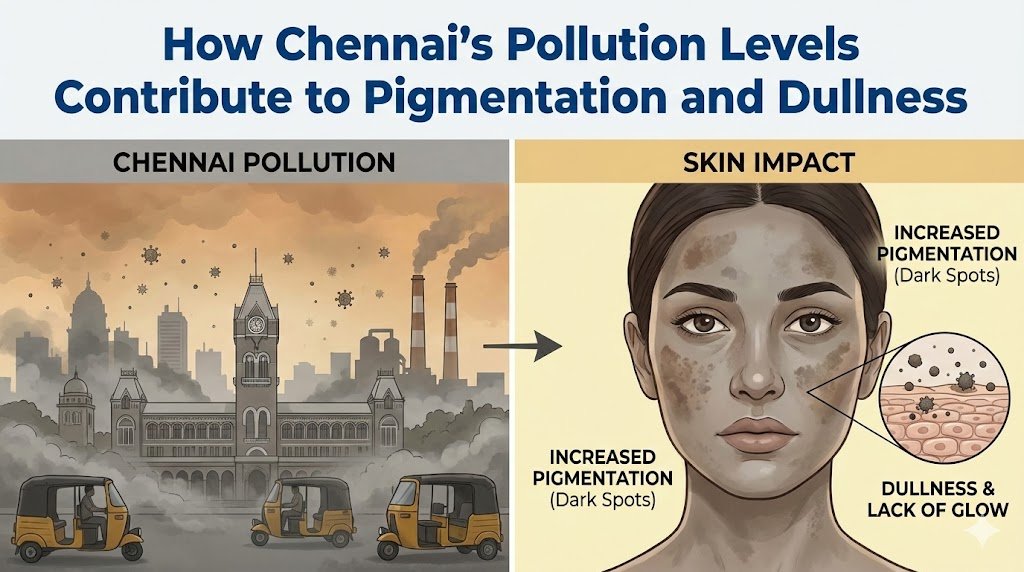
Chennai residents often blame the sun for their dark spots, uneven tone, and tired-looking skin, but pollution plays a far bigger role than most people realise. If you have been struggling with stubborn pigmentation, patchy dullness, or brown marks that keep returning despite home remedies, you are not alone. Many people now explore skin whitening treatment options because the city’s rising pollution levels push the skin into continuous stress. The mix of humidity, traffic emissions, and persistent smog makes pigmentation more aggressive and dullness more persistent. This article breaks down how pollution impacts your skin, why these effects feel stronger in Chennai compared to other cities, and how evidence-based skin whitening treatment in chennai can help restore clarity and brightness.
Chennai’s 2025 Pollution Crisis
Chennai has seen steady urban growth over the last decade, but this growth comes with higher particulate levels in the air. Residents often feel the effects physically, breathing difficulty during peak hours, irritated eyes, and increasingly, visible skin changes. To understand the skin impact, we need to look at what the air currently contains.
Current AQI Snapshot
Recent monitoring data shows that Chennai’s PM10 levels generally fall between 58 and 102 µg/m³ annually, with peaks above 136 µg/m³ during certain months. PM2.5, which is far more harmful to skin because of its tiny size, ranges between 65 and 110 µg/m³ on many high-traffic days. The World Health Organization recommends an annual PM2.5 limit of 5 µg/m³. The gap between the guideline and Chennai’s reality explains why pigmentation and dullness have become such common skin complaints among residents.
Key Pollution Sources
Chennai’s pollution comes from day-to-day sources that most residents come across without even noticing. Heavy traffic contributes a large share of fine particles. Construction sites release constant dust into the air, especially in developing zones. Industrial activity, open waste burning, and festive fireworks add nitrogen dioxide and sulphur dioxide into the atmosphere. When mixed with the city’s warm and moist air, these pollutants stay suspended for longer and settle back onto skin more easily.
Year-Over-Year Trends
Although Chennai has recorded roughly a 12% drop in PM10 levels since 2017, the improvement is slow compared to other major cities in the million-plus category. Rapid urbanisation, construction surges, and uneven enforcement continue to keep particulate levels high. As long as the air quality remains above safe limits, skin concerns such as pigmentation and dullness will continue to rise, especially in people already prone to sensitivity and tanning.
How Pollution Attacks Skin Health
Pollution affects the skin in two linked ways: by physically settling on the surface and by triggering deeper biochemical changes within the skin layers. Together, these effects explain why pigmentation deepens faster and dullness becomes harder to reverse in highly polluted settings.
Mechanism Behind Pigmentation
The smallest pollutant particles, especially PM2.5, can slip through the pores and settle into deeper layers of the skin. When these particles enter, they create oxidative stress, causing melanocytes to produce more melanin as a defence response. Over time, these patches become darker and more stubborn. Dust in Chennai often contains heavy metals as well. These metals attach to skin proteins and create pigment deposits that do not fade easily with regular creams or home remedies.
Dullness from Particle Assault
Pollution blocks oil glands and disrupts the skin’s natural ability to maintain hydration. When pores stay clogged, the skin loses its glow and starts to appear greyish or tired. Gases like nitrogen dioxide create mild but chronic inflammation, which slows down the natural cell renewal cycle. As renewal slows, dead skin accumulates and gives the face a dull, uneven texture.
Humidity–Pollution Synergy
One of the reasons Chennai residents experience more stubborn pigmentation compared to people in dry cities is the city’s humidity. Moist air traps pollutants and keeps them stuck on the skin for longer. In monsoon months, this becomes even worse because a thin film forms on the skin’s surface, allowing particles to cling more tightly. This film intensifies oxidative damage, making pigmentation deeper and dullness more visible. The humidity–pollution combination is uniquely stressful, which is why dermatologists often see similar pigment patterns among Chennai patients.
Science Linking Smog to Skin Damage
Research from dermatology and environmental science provides clear evidence that polluted air changes how the skin behaves. Two major pathways explain the pigmentation and dullness seen in high-smog cities.
Oxidative Stress Pathways
Pollutants generate reactive oxygen species (ROS), which disturb the normal function of the tyrosinase enzyme, the enzyme responsible for melanin formation. When tyrosinase becomes irregular, melanin distribution becomes uneven.
Barrier Disruption Effects
PM10 particles erode the outermost protective layer of the skin, known as the stratum corneum. Once this barrier weakens, irritants penetrate more easily, leading to inflammation and post-inflammatory hyperpigmentation. Pollution also reduces ceramide production, which is essential for maintaining skin smoothness and glow. This drop in ceramides correlates with a 15–25% increase in dullness among people living in polluted cities. The combination of barrier weakening and inflammation creates the perfect environment for pigmentation to worsen.
Skin Whitening Treatments in Chennai
With pollution affecting skin daily, many Chennai residents turn to dermatologists for personalised solutions. Clinics now see a growing demand for evidence-based pigmentation correction and brightness restoration. The treatments below are among the most commonly recommended.
Topical Lightening Protocols
Dermatologists often start with topical treatments that are safe, controlled, and effective for early to moderate pigmentation. These include:
- Niacinamide and Vitamin C serums to reduce melanin production and brighten uneven areas.
- Tranexamic acid formulations that target deeper pigment patches caused by pollution and inflammation.
- Prescription retinoids that speed cell turnover and shed dull outer layers more effectively.
- Peptide-based creams that repair pollution-damaged skin and improve texture.
Topical routines require consistency, but when supervised by a dermatologist, they deliver visible improvement within 6–12 weeks.
Advanced Laser Options
For deeper pigmentation that sits within the dermis, lasers provide more precise correction. Q-switched Nd:YAG lasers break down melanin particles without damaging surrounding tissue, making them a popular year-round choice for Chennai residents. Picosecond lasers offer faster results by shattering pigment clusters at higher speeds. These lasers are especially useful for long-standing dark spots that do not respond to topical treatments. Dermatologists also adjust settings based on skin tone, ensuring safety in warm Indian skin types.
Clinic-Based Combinations
Many patients benefit from combination plans that address the surface layer, deeper pigment, and ongoing damage. Chemical peels gently lift dull layers without over-exfoliating the skin. Microneedling with tranexamic acid helps rebuild the barrier while reducing pigment formation. Some clinics add antioxidant IV drips as a supportive therapy for patients exposed to high levels of pollution daily. A personalised approach provides better long-term results and lowers the chances of pigmentation returning.
Daily Defence Against Pollution
Daily care is essential to prevent pigmentation from worsening. Even the best in-clinic treatments need support from home routines that protect and repair.
Morning Prep Routine
A strong morning routine helps protect skin before stepping outdoors:
- Use a gentle cleanser to remove sweat and overnight buildup.
- Apply a vitamin C serum to neutralise free radicals.
- Follow with a broad-spectrum SPF50+ to block UV and pollution synergy.
- Add an antioxidant-rich moisturiser to strengthen the barrier.
Evening Recovery Steps
Evening is a time to remove pollutants that settle on the skin during the day. An oil-based cleanser dissolves particulate matter effectively, followed by a mild foaming cleanser to clear residue. Hyaluronic acid restores moisture lost to smog exposure. Night serums containing peptides or mild exfoliants help fade new pigmentation and smooth texture. A weekly AHA product can lift dullness without irritating sensitive skin.
Lifestyle Integration
Indoor air purifiers reduce secondary exposure by nearly 70%, which is helpful for those living close to main roads or industrial zones. Eating antioxidant-rich foods like berries, citrus fruits, green tea, and nuts helps neutralise internal oxidative stress caused by inhaled pollutants. Avoiding smoking and reducing outdoor exposure during high-AQI days also protect the skin from further damage.
Practical Clinic Advice for Chennai Residents
Residents seeking skin improvement should choose clinics that follow evidence-based protocols tailored to Indian skin. Always request a patch test before laser or peel sessions. A good dermatologist will give you a clear timeline, expected results, and maintenance plan. Skipping maintenance often leads to relapse, especially when you live in a high-pollution city like Chennai. Make sun protection and pollution care part of your routine even after completing professional treatment.
Conclusion
Chennai’s pollution creates the perfect environment for stubborn pigmentation and persistent dullness. Fine particles trigger oxidative stress, humidity traps pollutants on the skin, and gases slow cell renewal, leading to patchy and uneven skin tone. With the right clinic support and consistent daily habits, it is possible to reverse much of this damage. If you are considering skin whitening treatment in chennai, consult a trained dermatologist who can guide you with safe, science-backed options. With proper care, bright, clear, healthy skin is achievable, even in a city with high pollution levels.